LEADERS

International LEADERS Calling Market Crashes Years Ahead
Second to None, Anywhere...

'Warned 2000 tech slide; predicted 2008 meltdown in 2007. Forecasted 2020 global economic collapse in 2011, AND NOW- BY 2050 - THE MOTHER OF ALL CRASHES"

THE #FUTURE #OUTLOOKS - KEY AREAS OF #CONCERN AND #RISK

  Economic and Markets 2023 Outlook WARNING  What Worked for the Past Decades Will Not For The Next WHAT'S COMING - GLOBAL RECESSION? DE...

GLOBAL MARKETS


Live World Indices are powered by Investing.com

Champion, Lead, Inspire

Search This Blog

GREAT BARGAINS; FUN IDEAS

Showing posts with label russia. Show all posts

Monday, 24 August 2015

Are You Prepared For Big Bear? & More Top Insights


Is It Time To Get Into Crash Positions?


Maybe this flight won't go into a tailspin; perhaps it simply runs out of fuel.
With stock markets diving around the globe, a pressing question arises: is it time to get into Crash Positions?
In case you forgot how to get into Crash Positions, here's a reminder:
After a dizzying 500+ point drop in the Dow on Friday, should we brace for impact? There are plenty of fundamental and technical reasons to view the swoon this week as the initial downturn that presages a crash landing.
But if we look at the last equivalent spike down in October 2014, we're not so sure. Both spikes (October 2014 and August 2015) smashed through the lower Bollinger band, but the volume in last week's plummet was nothing special compared to the 2014 swoon.
Big moves have a bit more credence if they're accompanied by massive volume.


The prime minister insisted in an address on public television that he was proud of his time in office and had got “a good deal for the country”, despite bringing it “close to the edge”. He added that he was “shortly going to submit my resignation, and the resignation of my government, to the president”. The prime minister will be replaced for the duration of the short campaign by the president of Greece’s supreme court, Vassiliki Thanou-Christophilou – a vocal bailout opponent – as head of a caretaker government.


Nick Butler, former head of strategy for BP, told me, “We are in for a longer and more sustained period of low oil prices than in the late 1980s.” Why? He points to a perfect storm. Supply is up substantially because a decade of high oil prices encouraged producers throughout the world to invest vast amounts of money in finding new sources. Those investments are made and will keep supply flowing for years. Leonardo Maugeri, former head of strategy for the Italian energy giant Eni, says, “There is no way to stop this phenomenon.” He predicts that prices could actually drop to $35 per barrel next year, down from more than $105 last summer.
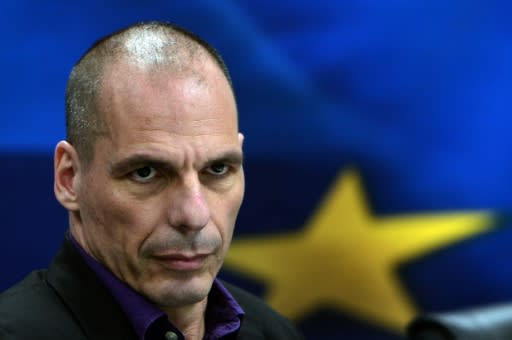


"Ask anyone who knows anything about Greece's finances and they will tell you this deal is not going to work.""The Greek finance minister... says more or less the same thin,


Study: Germany made €100bn profit on Greek crisisGreece’s biggest creditor Germany has made a huge profit on the country’s debt crisis over the last 5 years as it saved through lower interest payments on funds borrowed amid investor “flights to safety.”


The U.S. military has run the numbers on a sustained fight with Moscow, and they do not look good for the American side.


The global equity selloff that sent benchmark indexes to their worst week in four years played havoc with individual stocks and industries in the U.S. market.
To energy shares already snared in a bear market, add semiconductor stocks, which crossed the threshold by capping a decline of more than 20 percent. Apple Inc. also entered a bear market, while the Dow Jones Industrial Average entered a so-called correction with a decline of 10 percent from its last record. Biotechnology, small caps, media, transportation and commodity companies have also entered corrections.


The Standard & Poor’s 500 Index sank 3.2 percent on Friday to cap a weekly loss of 5.8 percent, the worst daily and weekly declines in almost four years. The benchmark gauge is down 7.5 percent from its last record in May, after dropping out of a trading range that has supported it for most of the year.


Learning Success: 

APPLY Tips From The Best


Image result for sir richard bransonSir Richard Branson, Virgin Group – 

Anyone who owns more than 400 companies and is worth billions of dollars is clearly doing many things right. I admire Richard Branson’s tenacity, and I admire his personal brand


Wednesday, 12 August 2015

Let the WAR (Currency) GAMES Begin? & More Top Insights


Central Banks Hold Nerve After China Devaluation


Global policymakers, including those at some of Asia's most intervention-minded central banks, are holding the line on their currency policies after China's surprise devaluation of the yuan.
China's central bank said Tuesday's 1.9 percent devaluation was a one-off move. It also switched to a more market-determined benchmark for the currency's daily trading band.
A weaker yuan makes Chinese exports cheaper and competing exports more expensive. Countries that see themselves at a competitive disadvantage might be tempted to devalue their own currencies in retaliation. But so far policymakers from South Korea, India, Indonesia and Japan see no reason for tit-for-tat trade-war policies.
"I don't think the move would trigger a global currency war," a Japanese policymaker said.

The devaluation is unlikely to perturb the Bank of Japan, whose money-printing programme to stimulate the economy has weakened the yen by 50 percent against the dollar since 2012.


Image result for bear market
The selloff took the MSCI Emerging Markets Index’s decline from a peak last September to 20 percent, the threshold for a bear market on a closing basis. Shares in Indonesia slumped to a 17-month low. Russia’s ruble weakened 2 percent against the dollar while currencies from Brazil to Chile fell at least 1.1 percent.


World Markets Shudder,

Expect More Trouble GoingForward


China's currency devaluation ripped global risk markets, but the real fear is that what's behind the move could be a bigger problem for the world economy.
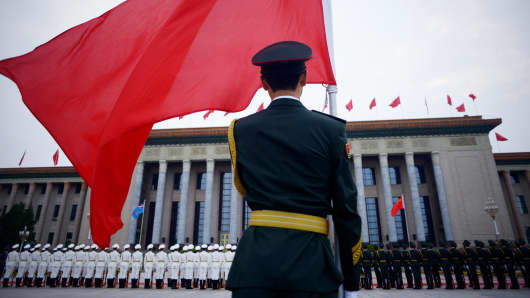
Chinese honor guards outside the Great Hall of the People in Beijing.
Global stock markets fell and commodities were crushed. Emerging market equities were casualties, and currencies from the Mexican peso to the Australian dollar were smacked. The U.S. dollar was higher against a basket of currencies, and buyers moved into the safety of bunds and Treasurys, driving yields sharply lower. The U.S. 10-year was yielding 2.13 percent.
"It's a little bit of damage to the global growth psychology. If the country that's been growing the fastest and been one of the mainstays of global growth momentum ... is allowing their currency to sink a little bit, if they're resorting to that, how bad are things around the world?" said Robert Sinche, chief global strategist at Amherst Pierpont Securities.

China the Ultimate Crony Capitalist State devalues its currency 


 dragon cc


 In case you haven’t noticed things aren’t so hot in China. In fact the country, the Ultimate Crony Capitalist State is in serious trouble. Today it devalued the yuan, its currency.
We have been sounding the alarm on China for a very long time. Not that we’ve been the only ones. That China has been headed for real trouble has been obvious to many for quite a while, years. Regardless, trouble is here now. The world’s second largest economy is pretty much in crisis mode, or very near it and this state of affairs will have an impact (it already has) globally.

What should also be understood is that this is not a separate episode from the initial financial crisis which hit much of the world in 2008. China, Greece, Japan, it’s a continuation of the Great Recession. We’re not out of it. Indeed, some believe that we likely have not seen the worst of it.


Mexico's central bank on Tuesday said it sold $107 million of $200 million offered in an auction to support the peso currency at an average price of 16.3274 pesos per dollar. (Reporting by Mexico Newsroom)


Russian state companies and banks are cutting staff and scrapping projects as they prepare for another surge of foreign debt repayments of at least $35 billion before the end of the year amid falling energy export revenues and a weaker rouble.


A man walks past the Bank of Japan (BOJ) building in Tokyo, June 24, 2015.  REUTERS/Toru Hanai


apanese analysts are sharply cutting their economic growth forecasts for the year amid expectations that activity shrank in the second quarter, a survey showed, piling pressure on the central bank to trim its own rosy projections.


The central government’s debt hit a record high of ¥1.057 quadrillion at the end of June, up by some ¥3.87 trillion from the end of March, according to the Finance Ministry. The national debts, or the combined balance of outstanding Japanese government bonds, financing bills to cover temporary funding shortfalls and borrowings, increased due to rising social security costs, including on medical care and pensions, amid the aging of society.


Image result for russian banks

The ruble slid the most in emerging markets as the biggest drop in China’s yuan in two decades drove down oil prices and sparked concern Russia’s exports to its largest trading partner will be curtailed.


Industrial Production Falls 

In June


Industrial production across the eurozone declined more than expected in June, rounding off a weak second quarter and indicating that lackluster investment continues to restrain economic activity.
The European Union's statistics agency said Wednesday that production at factories, mines and utilities fell for the second straight month in June, down 0.4% from May. Economists polled by The Wall Street Journal had forecast a monthly decline of 0.1%.
The data, coming ahead of Friday's publication of gross domestic product estimates, "shed a concerning light on the manufacturing recovery in 2015" as some of the region's main trading partners are going through a weak growth spell, said Bert Colijn, an economist at ING Bank.
A cooling Chinese economy prompted Beijing on Tuesday to devalue its currency, while data on Monday showed that Russia's economy moved further into recession in the second quarter.


Learning Success: 

APPLY Tips From The Best


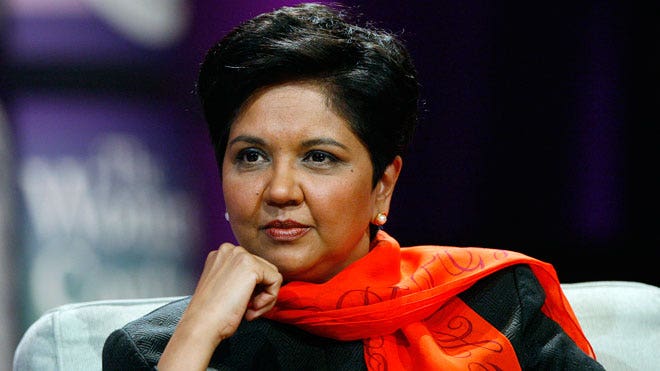
Indra Nooyi,  

PepsiCo, another of 100 Most Powerful Women - Forbes, has not only led her company to record financial results but is making strides to move PepsiCo in a healthier direction, leading the courageous charge to shed traditional fast food properties and to replace them with initiatives to supply healthier foods. She is deeply caring and committed as a senior executive. She is a fun-loving executive as well—she played lead guitar for an all-woman rock band in college, loved to play cricket, and is known to sing karaoke and perform at corporate gatherings to this day. Yes, I have been known to relate to her fun-loving spirit as a senior executive as well.


Top Weekly Ideas and Insights


An Inconvenient Truth


"Eurasia BIG Bang" 

What Happens When Geo-Political Shifts Occur?


EXISTENTIAL REALITY 

"Humanity's Coming of Age"

 - Last Days: Hegemony or Survival -


Popular Posts All Time

Learn, win achieve