LEADERS

International LEADERS Calling Market Crashes Years Ahead
Second to None, Anywhere...

'Warned 2000 tech slide; predicted 2008 meltdown in 2007. Forecasted 2020 global economic collapse in 2011, AND NOW- BY 2050 - THE MOTHER OF ALL CRASHES"

THE #FUTURE #OUTLOOKS - KEY AREAS OF #CONCERN AND #RISK

  Economic and Markets 2023 Outlook WARNING  What Worked for the Past Decades Will Not For The Next WHAT'S COMING - GLOBAL RECESSION? DE...

GLOBAL MARKETS


Live World Indices are powered by Investing.com

Champion, Lead, Inspire

Search This Blog

GREAT BARGAINS; FUN IDEAS

Monday, 29 June 2015

Chinese Stock Massacre Continues, & Top Insights


Chinese stock markets plunge over fears share prices are unsustainable


China’s Shanghai composite index falls more than 7% in mass sell-off after six months of frenetic buying driven by a state clampdown on property investment

Chinese stock markets plunged on Friday as investors rushed to sell over fears that frenzied buying in recent months had sent share prices to unsustainable levels.

The Shanghai composite index, which reached a post-crash record of 5,166 earlier this month, has since lost nearly 1,000 points, down more than 7% at the last session to 4,193. The CSI300 index of the largest listed companies in Shanghai and Shenzhen fell 7.9%. 
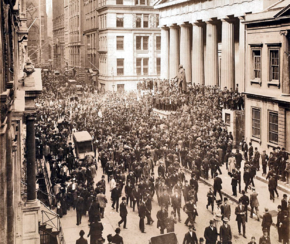


Banks will remain shut until at least after a July 5 referendum called by Prime Minister Alexis Tsipras on whether to accept austerity in exchange for a European bailout, Kathemerini newspaper reported, citing unnamed sources.


Paul Craig Roberts joins the show today to discuss Greece’s possible credit default and its implications, the ongoing tensions between Russia and America, and the U.S. bond market bubble
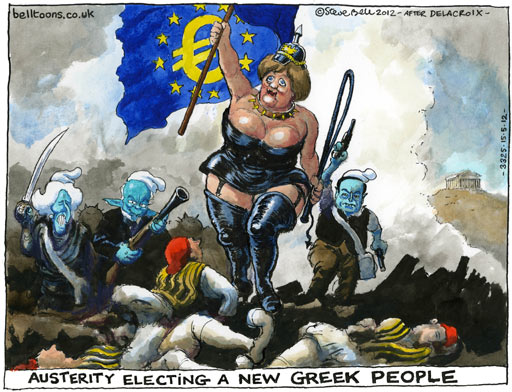


"The Greek authorities have asked for a month extension. But in that month there can be no disbursements," he said. "How does the Greek government think that it will survive and deal with its problems in that period? I do not know," Dijsselbloem said.


Previous sharp drops in the stock markets this year have been quickly countered by optimistic statements in state-controlled media. But Saturday’s moves, which included the fourth reduction in interest rates since last November, were unusual in so closely following a stock market nose-dive.


The BP report also shows China’s energy demand is growing at the slowest pace since the Asian Financial Crisis in the 1990s as the communist nation suffers a slowing of its economy and tries to reduce its reliance on heavy industry, Bloomberg reported


Collapse, Part 5: Things Fall Apart


It is impossible to wean an economy that relies on debt and leverage for its "growth" of excessive debt and leverage.


The phrase famously appears in William Butler Yeats' 1919 poem, The Second Coming:


Turning and turning in the widening gyre

The falcon cannot hear the falconer;

Things fall apart; the centre cannot hold;

Mere anarchy is loosed upon the world,

The blood-dimmed tide is loosed, and everywhere

The ceremony of innocence is drowned;

The best lack all conviction, while the worst
Are full of passionate intensity.


More Leading Global Headlines


ISIS Plans To Launch Terror Attacks Across India


Top Weekly Ideas and Insights


"Peak Everything"


Cornell University


Friday, 26 June 2015

Trillions Lost, As Chinese Stock Slump Grows, & Top Insights


Chinese Shares Slump Raises Questions About Length of Correction

China’s main stock indexes have finished the week on a grim note, with the Shanghai Composite ending down 13.3%, its worst showing since the global financial crisis.
Many analysts had warned that Chinese bourses had become too frothy since November, with some companies trading at 200 or 300 times earnings amid incredible volatility.
The doubling in primary indexes in Shanghai and Shenzhen since late last year has made Chinese markets the world’s best performers. But net market capitalisation of the equity markets, at 66.2tn yuan (£6.7tn), now exceeds the size of China’s GDP.


Weekend deadline for Greece after negotiations draw blank


Greece’s creditors have set the country a weekend deadline to avoid default and stay in the eurozone, after more than 24 hours of non-stop Brussels negotiations at the highest level resulted in stalemate.
After talks between Athens and its creditors failed to reach an agreement on Thursday, a further meeting of eurozone finance ministers will be held on Saturday in a bid to achieve a breakthrough. With the German chancellor Angela Merkel insisting that a deal must be reached before markets open on Monday morning, Greece is now running out of time to secure an accord and make a €1.6bn payment to the International Monetary Fund (IMF) on Tuesday.


TPP protest

Here’s how much corporations paid US senators to fast-track the TPP bill

A decade in the making, the controversial Trans-Pacific Partnership (TPP) is reaching its climax and as Congress hotly debates the biggest trade deal in a generation, its backers have turned on the cash spigot in the hopes of getting it passed.

“We’re very much in the endgame,” US trade representative Michael Froman told reporters over the weekend at a meeting of the 21-member Asia-Pacific Economic Cooperation forum on the resort island of Boracay. His comments came days after TPP passed another crucial vote in the Senate.


Away from Greece and S&P has revised the outlook for the UK from stable to negative, while keeping the country’s credit rating at AAA. It points to the possible departure of the UK from the EU, with the forthcoming referendum:
  • 12-Jun-2015 17:10:21 - S&P REVISES UNITED KINGDOM SOVEREIGN CREDIT OUTLOOK DOWN TO NEGATIVE FROM STABLE; CURRENT RATING IS AAA
  • 12-Jun-2015 17:12:11 - S&P - POSSIBLE U.K. DEPARTURE FROM EU ALSO RAISES QUESTIONS ABOUT THE FINANCING OF THE ECONOMY’S LARGE TWIN DEFICITS AND HIGH SHORT-TERM EXTERNAL DEBT
  • 12-Jun-2015 17:12:29 - S&P - U.K. GOVERNMENT’S DECISION TO HOLD REFERENDUM ON EU MEMBERSHIP SHOWS ECONOMIC POLICYMAKING COULD BE MORE EXPOSED TO PARTY POLITICS THAN EXPECTED


On average, American households are $7,177 in debt, according to a CardHub study. That's a lot of debt, but not necessarily an unconquerable amount. Now's a good time to start digging your way out of it.


On war, Griffin contends, “War is primarily a psychological weapon. The threat of war, the fear of war, that is more useful to governments than actual war. Machiavelli said years ago said that the best way to keep people content and overlook the miseries they have to suffer under their own governments is to embroil the people in wars or rumors of wars. So, they would be so afraid of an enemy that they would tolerate any insult to their liberties as a means of preventing this thing they dread so much. That is certainly the prime operative today.


In a country where a sitting congressman told a crowd that evolution and the Big Bang are “lies straight from the pit of hell,” (link is external) where the chairman of a Senate environmental panel brought a snowball (link is external) into the chamber as evidence that climate change is a hoax, where almost one in three citizens can’t name the vice president (link is external), it is beyond dispute that critical thinking has been abandoned as a cultural value. Our failure as a society to connect the dots, to see that such anti-intellectualism comes with a huge price, could eventually be our downfall.


It was another volatile week in the markets. The interest rate decision by the U.S. Fed on Wednesday was a non-event with no change in the Fed’s monetary policy. The market reacted with a spike in stocks, bonds, and precious metals, while the U.S. dollar took a dive. Also, the unfolding drama in Greece spooked markets and metals; stock markets are nervous while metals mostly get bids each time the Greek crisis flares up.


Collapse, Part 4: Loss of Faith in Public 

Institutions

Public institutions are now devoted to serving their own vested interests or the interests of private financial Elites.

Though we may think of collapse in terms of ATMs not working and rampaging mobs, collapse actually starts with the intangible loss of faith in public institutions:elected officials, law enforcement, the justice system and the agencies of financial regulation (anti-trust, etc.).


Unsurprisingly to those who discern the structural rot of the status quo,Americans No Longer Believe In Their Institutions:


“Americans’ confidence in most major U.S. institutions remains below the historical average for each one,” a Gallup spokesman said in a news release. All in all, it’s a picture of a nation discouraged about its present and worried about its future,More  and highly doubtful that its institutions can pull America out of its trough.


The Extinction Debate


Popular Posts All Time

Learn, win achieve