LEADERS

International LEADERS Calling Market Crashes Years Ahead
Second to None, Anywhere...

'Warned 2000 tech slide; predicted 2008 meltdown in 2007. Forecasted 2020 global economic collapse in 2011, AND NOW- BY 2050 - THE MOTHER OF ALL CRASHES"

THE #FUTURE #OUTLOOKS - KEY AREAS OF #CONCERN AND #RISK

  Economic and Markets 2023 Outlook WARNING  What Worked for the Past Decades Will Not For The Next WHAT'S COMING - GLOBAL RECESSION? DE...

GLOBAL MARKETS


Live World Indices are powered by Investing.com

Champion, Lead, Inspire

Search This Blog

GREAT BARGAINS; FUN IDEAS

Showing posts with label ideas. Show all posts

Tuesday, 1 September 2015

Speculators Causing Havoc With Oil Prices, & More Insights


Why So Much Oil Price Volatility? Blame The Speculators
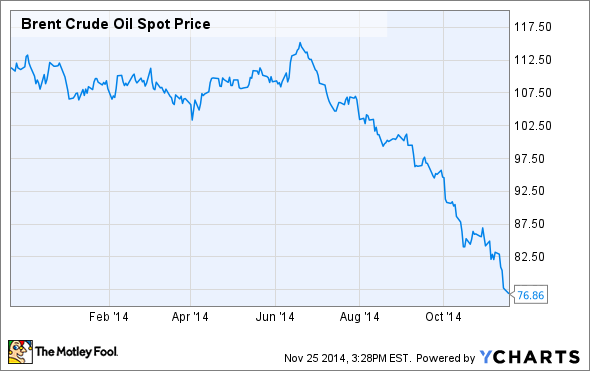


Oil prices crashed last week only to rebound at lightning speed. On August 28, oil prices surged 10 percent, the largest one-day gain in seven years. So, what happens next for oil prices?
On the face of it, the crash and massive rebound makes little sense, with many oil market analysts undoubtedly left shaking their heads.
But there is a logic to what unfolded, just not the logic of the physical market for crude. Oil prices, as if we needed a reminder, are largely driven by speculation. Why else would oil prices plummet by five percent, then spike by 10 percent just a few days later? Not much changed in terms of actual supply and demand of oil in the intervening days.
Sure, Royal Dutch Shell declared force majeure on some oil shipments from Nigeria, as two pipelines had to be shut down. That could interrupt some oil supplies. But other than that, the physical market for crude didn’t see a whole lot of change in just a few days’ time.


The Fed won’t raise rates until the world economy looks healthier, but the world economy is actually OK. Even China is OK. (Apple said that the China consumer is pretty healthy). World economic numbers will look much better in 2016, and central banks outside the U.S. will begin raising rates … and that will finally give the Fed the cover it needs to raise.


The seriousness of last week’s shocking action in the market is shown by the volatility index, which posted its second highest reading since its inception in 1990. This is comparable to the great crash of 2008/9.


Many migrants are crossing from Turkey to Greece, Macedonia and Serbia before entering Hungary and then moving on to wealthier countries in northern Europe. (There is an important legal distinction between a migrant who has fled his or her country and a refugee seeking asylum.) The conditions in which they would wait out approval of their applications in Germany and Sweden are better than in places such as Hungary or Greece.


Both moves—the government pulling back from its market bailout and the currency devaluation—stem from the same ominous problem: China’s leaders are scrambling to find the money to keep its economy running. To understand the broader forces that led to this predicament, here’s a chart-based explainer tracing its origins.


Fermi's Paradox, climate change, capitalism, and collapse are some of the subjects discussed in this feature length documentary on the environmental crisis. Interviewees include Bill McKibben, Gary Snyder, Derrick Jensen, Peter D. Ward, Jill Stein, Bill Patzert, Guy McPherson and other top academics, scientists and public intellectuals.


US Oil Production Nears 


Previous Peak


The EIA’s Monthly Energy Review came out a couple of days ago. The data is in thousand barrels per day and the last data point is July 2015.


US consumption of total liquids, or as the EIA calls it, petroleum products supplied, reached 20,000,000 barrels per day for the first time since February of 2008.
Something I never noticed before, consumption started to drop in January 2008, seven months before the price, along with world production, started to drop in August 2008. This had to be a price driven decline. Could the current June and July increase in consumption be price driven also?







A Passing Thought...


Friday, 3 July 2015

Australian Stocks Plunge - With China / Greece Fears, & Top Buffet Insights


Australian stocks fall steeply on Greek worries, China share crash


Australian shares have closed down more than 1 per cent as traders cut their exposure ahead of this weekend's Greek referendum and as China's stock market crash worsens.
The benchmark ASX 200 index finished off 62 points, or 1.1 per cent, to 5,538, while the broader All Ordinaries index was off 60 points at 5,528.
IG Markets institutional trader Chris Weston said the fall reflects "gap risk" around the Greek vote, which takes place on Sunday, meaning that traders cannot react immediately, but could be queuing sell orders on Monday morning, with few willing buyers.
"You can't deal when the market's closed but, when it does open, you get a situation where the market could open 3 per cent lower for example," he said.
"Depending on what you're in, that stock will open potentially 2 to 10 per cent lower."
Mr Weston warned that US Dow Jones Industrial Average futures could be down 400-500 points on a "no" vote, a fall of 2-3 per cent, and there is not a lot of upside to be had.


50 best things Warren Buffett told investors over past 50 years


It’s been 50 years since Warren Buffett — a.k.a. the Oracle of Omaha — took control of Berkshire Hathaway BRK.A, -0.21% BRK.B, +0.07%   and turned a sleepy textile company into a powerful conglomerate with multiple businesses and investments. And that means it’s been 50 years since Buffett started writing his annual letter to shareholders.
The 2014 edition — the epistles always refer back to the previous year — gives us the perfect excuse to review all 50 letters and find 50 of the most memorable quotes from them.
Keep in mind that Buffett’s early letters — some of which were not actually signed by him — featured little more than straightforward accounts of Berkshire’s finances. But by the late 1970s, the oracle started, well, oracle-ing, offering pointed, humorous and sage-like commentary on the markets. And along the way, the cost-conscious billionaire wasn’t afraid to make fun of himself (and his one indulgence — namely, a private jet).
Read and enjoy.


Image result for homeless person

US debt is north of $18 trillion. (Amazingly, *cough*, it hasn’t changed in months *cough*.) Forward promises are north of $200 trillion, meaning that a child born today is responsible to repay $625,000. And since roughly half the US population pays no income tax… and presuming that this newborn will be a member of the productive half… he or she is born $1.25 million in debt. Such repayments will never happen. Most of those debts will not be repaid.


It did so for all the reasons that I’ve mentioned before — namely that Germany cannot allow a Grexit from the euro zone without ultimately destroying the German economic miracle of the last few decades … and the Greeks outside the euro would see their modern lifestyles crumble in the face of sharp inflation and radically reduced access to the imported goods they take for granted today


The confederation, which represents some 280,000 small and medium-sized businesses, has been badly hit by capital controls. More than half of Greece’s food and raw materials are imported, but without a functioning banking system there was no way to wire money abroad and pay for supplies, said Korkidis.
“Multinationals can, but local companies can’t,” he sighed. “Shortages are manageable this week because traders have stock, but next week that won’t be the case. We are experiencing things we never thought we’d see.”


To quantify the volatility the following chart shows the (absolute value of) percent deviation from silver’s 200 day moving average. A spike higher or lower is volatility. The six spikes in volatility above 40% deviation from the 200 day moving average are quite large.


Image result for euro zone sinking


Eurozone consumer prices rose for the first time in six months during May, a victory for the ECB in its campaign to avoid a debilitating period of deflation, during which businesses and households might hold back on spending in the expectation that they will get better deals in the future.
Tuesday is the final day of the state's current budget year, and top officials turned to planning for a Wednesday in which Illinois government has limited authority to spend money. It's also the day a cash-strapped CPS is due to make a $634 million pension payment


Financial soundness of South Korean households worsened in the first quarter as their debts snowballed on the back of low interest rates, a report showed Tuesday, adding to persistent concerns that a looming U.S. rate hike may unleash credit risks.


As systemic solutions fall short, we must grasp the nettle of making our own arrangements in a time characterized by burgeoning demands and diminishing resources, capital and security.
The idea that our large-scale problems could be fixed with systemic reforms is enticing: replace the thousands of pages of tax code with a simple flat tax without deductions, for example, or the replacement of too big to jail/fail banks with community-owned banks that served the public, not shareholders.
But the attraction of reforms is a siren song, because our system is run by vested interests for vested interests, period. Any real reform is Dead On Arrival (DOA) because any real reform threatens the swag and security of vested interests.


More Leading Global Headlines


Saturday, 7 June 2014

*EXCLUSIVE* PWP's Power Ideas Forum: "Of Cycles for Wealth and Humanity"

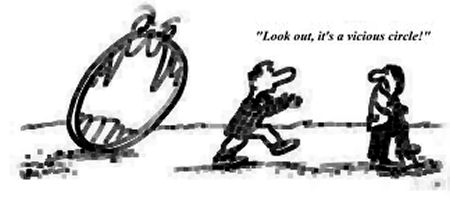
Odum and the VICIOUS CIRCLE PRINCIPLE

Exclusive authorised premier release


By Craig Dilworth


31 May 2014

The work of the systems-ecologist Howard Odum presages the vicious circle principle (VCP) presented in Too Smart for Our Own Good(2009).[*] As presented in Too Smart, the VCP is as follows:

Humankind’s development consists in an accelerating movement from situations of scarcity/need, to technological innovation, to increased resource availability, to increased consumption, to population growth, to resource depletion, to scarcity once again, and so on. (p. 110)

     Applying Odum’s thinking to the VCP’s interpretation of changes in the actual development/evol­ution of humankind suggests that with each technological revolution there has resulted an increase in the usable energy available to our species, which has in turn resulted in population growth and a subsequent demand for increasing quantities of energy. On the VCP this demand has to date generally been met (particularly since the industrial revolution and the near-exponential increase in our burning of fossil fuels), with the result that the vicious circle of humankind’s development has grown in both size and environmental impact.

     A second point of contact between Odum and the VCP – related to the first – is Odum’s emphasis on system-development’s involving pulses. He applies this notion to both living and non-living systems. Among the living are ecosystems, individual human civilizations, and human civilization as a whole. In Too Smart pulsing is emphasized with regard to the human species as a whole, each turn of the circle constituting a pulse.

     The pulses of the populations of non-human species tend to fluctuate about a mean (cf. Too Smart, pp. 21–22), in the case of K-selected species their growth or shrinking depending on both internal and external population checks. But, according to the VCP, in the case of the total human population these pulses have taken the form of the constantly increasing growth of the human enterprize. In each instance of humankind’s developing technology, which has taken us through the javelin, bow-and-arrow, hoe, plow, coal, and oil and natural gas phases, the problems (scarcities) have as a matter of fact in each case led to a of technological development capable of harnessing ever-greateramounts of energy from the environment, and a consequent weakening of human population checks and a growth in the human population. Here we might also note, in keeping with Tainter, that part of the vicious circle consists in the diminishing returns that eventually hit any new technology, leading to the need for its replacement.


     According to Odum...

Read More

Popular Posts All Time

Learn, win achieve