LEADERS

International LEADERS Calling Market Crashes Years Ahead
Second to None, Anywhere...

'Warned 2000 tech slide; predicted 2008 meltdown in 2007. Forecasted 2020 global economic collapse in 2011, AND NOW- BY 2050 - THE MOTHER OF ALL CRASHES"

THE #FUTURE #OUTLOOKS - KEY AREAS OF #CONCERN AND #RISK

  Economic and Markets 2023 Outlook WARNING  What Worked for the Past Decades Will Not For The Next WHAT'S COMING - GLOBAL RECESSION? DE...

GLOBAL MARKETS


Live World Indices are powered by Investing.com

Champion, Lead, Inspire

Search This Blog

GREAT BARGAINS; FUN IDEAS

Showing posts with label #markets. Show all posts

Sunday, 3 April 2022

ARE YOU READY FOR #LONGTERM #INVERTED #YIELD CURVE?

 SEEKING ALPHA


Is an inverted yield curve here to stay and what does that mean?


The yield curve between the 2-year and 10-year Treasury notes has inverted again to start Friday’s session, a closely watched indicator that has historically been associated with eventual recessions.

While the curve has now flirted back and forth with inversion over the last several days, investors are looking to see what the dynamic signals and whether the condition is likely to persist over a meaningful period of time.

At the moment, the U.S. 10-year Treasury yield is up five basis points to 2.39%, whereas the U.S. 2-year Treasury yield is up twelve basis points to 2.45%.

Inversion describes a situation where the longer-duration bond has a lower yield than the shorter-duration one. This represents the opposite condition than usual, as investors typically ask for additional return when locking up their cash for a longer period of time. Thus, under normal conditions, long-duration bonds generally have higher rates than those with shorter durations.

The concern surrounding inversion centers around the idea of a potential future recession.


THE SIGN THAT PREDICTS RECESSIONS


Monday, 13 April 2015

J.P. Morgan’s Dimon Warns HUGE Crisis Lurking

J P Morgan's Dimon Warns Next Crisis Will Bring Even More Volatility

Image result for bernie madoff


Wall St. - Who will be swimming naked next time?


LONDON (Market Watch) you ain't seen nothing yet, when it comes to market wreckage from a financial crisis, according to J P Morgan's Jamie Dimon. In his annual letter to shareholders, the bank's chief executive warned " there will be another crisis" - and the market reaction could even be more volatile, because the regulations are now tougher.


It's Going To Be Worse? 


He argued the crackdown on the financial sector, added to more-stringent requirements for capital and liquidity, will hamper banks' capacity to act as a buffer against shocks in the financial markets. Banks could become reluctant to extend credit, for example, and less likely to take on stock issuance through rights offering, which would essentially create a shortage of securities. Read More


Man the Lifeboats! 

Monday, 2 September 2013

Jim Rogers Blog - Banks Stop Printing Artificial Money

Read More

There is one big problem with Jim's statement - Central Banks have alway and will always print money artificially. Why? First: How is money created? Where is it born? Who creates it? The answers to  these questions are actually quite simple. Money is created by virtue of a journal entry by a Central Banker in their books of account. There is little "physical" rhyme or reason for its creation, as the basis for authorizing the entry is a decision made by policy-makers based on the circumstances of the time. So the amount of entry is not determined by a set tried and true formula tied to GDP or any similar economic measure. It is largely arbitrary. 

So the paper you hold in your hands, bank accounts or use to ascribe other assets value is existentially nothing more than the fiat offspring of a Central Banker's accounting entry. It is not tied to national resources or future resource output potential in anyway - that would put  too much science into this mystical journal entry and money printing process. By the way, the more we print the more global stock markets go up as shown:


Global Stock Market Growth Flat J -Curve (Exponential Upwards)


Therein lies the real issue, because as national resources behind the money supply are exponentially depleted by expanding populations, so is the de facto value of each money unit that had ever or will ever be printed.Thus, creating the basis for another exponential J-curve, as there is an inverse relationship between printed money and exponential resource output depletion. (see charts below) More and more printed money is simply needed to preserve the statu quo perceptions and defer social unrest.

Global Money Supply Flat J-Curve (Exponential Upwards) 


Global Resource Depletion Flat J-curve (Exponential Upwards)


Global Population Growth Flat J-Curve (Exponential Upwards)


Debasement in a sense actually started when the very first dollar was printed. The above hockey-stick charts show a fairly clear relationship between the expanding expanding money supply, resource depletion and population growth, leading to two logical questions: What's left? How long will it last?  The chart below uses oil as a surrogate for resources - and as expected the J-curve is inverted to the money, depletion and population J-curves above.


Global OIL Production (Extraction) Declines - Flat J Curve (Trending to Exponential Downwards)


Not only do these charts paint an obviously  bleak picture - the most important observation is that they are all going the wrong way - Exponentially!  And so is the climate right along with it as population growth spurs a J-curve in climate change as well as can be seen in the undernoted chart.


Global Climate Change - Flat J Curve (Exponential Upwards)


Bottom line is that the printing of money actually correlates with the respective J-curves population growth, resource depletion and climate change. While they correlate the printing of money appears to affect everything in the wrong way. But regardless of causation or correlation all these charts are forming J-curves going the wrong way.  But most importantly, they are doing in EXPONENTIALLY!   

Now try explain these simple J-curves to Central Bankers in Greece, Cyprus, Spain, Portugal, Nauru, Japan, Italy, Ireland, and the rest. Money is de jure or legal evidence from the issuing state that it is obliged to pay its holder the stated value of resource outputs through its various agencies. All is fine until there are no further resource outputs because inputs no longer exist for conversion by the nation's economic processes . As we can see in individual real nations noted, as these J-Curves continue to accelerate, the economic effects and value of money diminishes by country, and should ultimately do so in an exponential manner globally.   


What next? Just keep reading the international headlines.


INVESTORS' INSIGHTS

First Financial Insights
September 2, 2013


"Stop Printing Artificial Money"


Tuesday, 27 August 2013

BIG Mac Measures Inflation


Over 350,000 Trillion Served

The BIG point here is that no one in their right minds trusts or believes the CPI numbers anywhere on the planet. It is a number that by its very nature is subject to all forms of manipulation. Yet it is perhaps the most critical economic metric in the field of abstract economics.From this number investors set their expected rates of return inclusive of inflation. There are many pundits, economists and advisers who are saying this number has been pushed deliberately downwards to match the current policies of government.

We believe them because the grocery store bill, gas pumps and McDonald's prices seem to be way ahead of reported national CPI figures. Who do you believe? What is the real CPI?

One approach, as suggested is to look at the hours of work required to buy a staple or basket of staples. But even that is open to transgressions, such as: who is the average worker and what are their wages? Then do you apply local,  regional or national wages? Is there a solution?  Not really, save for doing you own personal calculations, both for personal and investment purposes. That number is probably as good as any, but certainly of more relevance to your circumstances.

Remember that in the end money is a medium - being a communication device intended to transmit a subjective value idea from sender to receiver. The message of value transmitted is an abstract that will never be subject to object scientific measure. It is simply the best social device we have to facilitate human activity.

INVESTORS INSIGHTS
First Financial Insights
August 27, 2013 

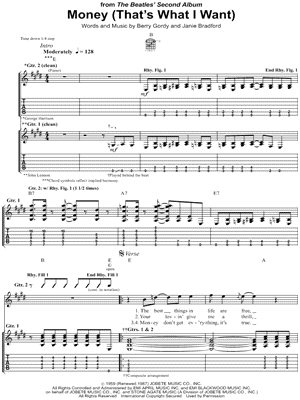
"Money ain't everything it's true, but what it can't get...?"
Beatles, Circa 1961


Thursday, 22 August 2013

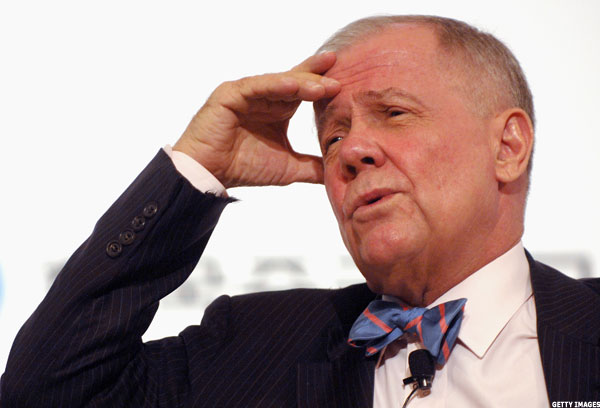
The Jim Rogers Blog : Financial Calamity US Dollar Collapse?


Just cannot see eye to eye with Jim on the collapse of the US dollar, albeit the financial calamity is more or less a hangover from the 2008 Meltdown and remains plausible. Indeed we had  forecasted such a collapse two years back, by 2020. Bonds yes; but a currency short is fraught with too many pitfalls.

There are many reasons behind the likely stability embedded in the US dollar in such times. Two are big ones. One,  it will simply win by default because other currencies that are competitive, in any significant way, should be that much worse off in the turbulent economic times ahead. Remember, the US is a Hegemony with about 60 -70% of the world's resources and economies within its influences and/or control. There is little else in terms of a viable surrogate exchange media that could handle the global financial volume and liquidity needs as well. Former communist countries have huge credibility issues to overcome to garner any trust for this role.

But most importantly - they have bigger GUNS! In the end, that may be all that matters. 

INVESTORS' INSIGHTS
First Financial Insights
August 22, 2013 


Pentagon 2020 Outlook:
 Continues to See Strong US Dollar


Tuesday, 20 August 2013

Faber Buys #Sprott - Is On-Going Disclosure Required?

(Read More)

International investment adviser Marc Faber is author of The Gloom, Boom & Doom Report. (SHERWIN CRASTO/SHERWIN CRASTO/REUTERS)

"BUY GOLD???"


While we have long held a position that in the long-run there is no legitimate or logical reason based on sequential forward events, and both historical asset-class performance and purchasing power losses over the past thirty-three years to own this object, yet this psychotic placebo continues to attract the attention of speculators.  Nouriel Roubini had candidly referred to it as a "barbaric relic" - his kind diplomacy is respected. 

So why do promoters such as Dr Doom continue with there promotions despite all this? We can presume that they understand the psychosis of small investors attracted to such a cure all placebo and operate to take advantage of their fantasy. The above purchase of Sprott affirms the possibility of such a tactic by promoters. 

But the most important issue is not whether to buy or sell this object - the real issue is disclosure. That is will the promoters advise the public of subsequent sales before they are effected or will they cleverly front-run them in various de facto forms ahead of small investors, underneath the radar of a complex myriad of international rules, laws and regulations?

Funny thing, we really don't expect  answers to these questions any time soon.


INVESTORS'  INSIGHTS
First Financial Insights 
August 20, 2013  

Just Keeping them ... 


Friday, 16 August 2013

#APPLE Drifts Without Jobs says Oracle CEO


ellison0812


Many months# ago we actually concluded that without Steve Jobs the company would not be able to repeat or meet the achievements or expectations of its founder. There is an artistic-creative element in people of Steve's character that cannot be replicated by professionally trained managers from Ivy-league business schools. 

Moreover, entrepreneurial vision and drive is a talent few ever configure in a similar way. 

So whether its Ford, Buffet, Carnegie, Gates, Stronich or Jobs, their unique compositions are rare and the companies they build and run are never the same once they move on.

Keeping Apple on the watch list, but our vision for the future remains short-sighted.

INVESTORS' INSIGHTS
First Financial Insights
August 16, 2013


Thursday, 15 August 2013

#Facebook Executive Dumps Shares


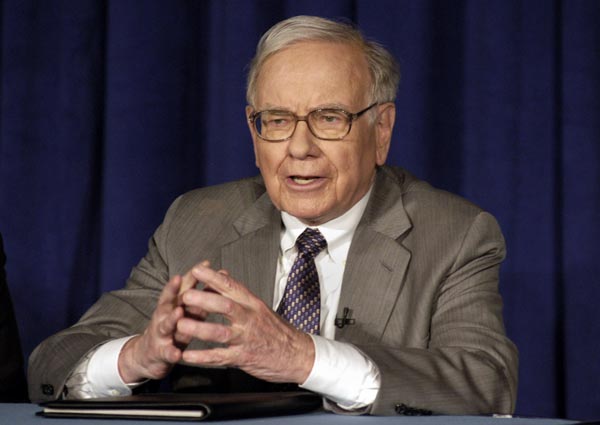
One primary rule of investing - when the Company's top executives start dumping their shares, it's time to head for the hills. We are not going to set out all the reasons why and all the excuses executives use to justify their dispositions. Nope, instead we are going to ask you to look at the fellow captioned above and ask "what if this guy started dumping shares in that small town company from Omaha?

Never happened, and if it did - you know that the flood waters are really coming. 

It all boils down to how do you believe in folks that do not believe in themselves? Just plain-old folksy small-town stuff. There is however - one City-slicker - Jimmy Rogers, who thinks that Facebook is not an investment,its a waste of time. We agreed with him then, and still do. 

This also may explain why Facebook users are so depressed - they finally figured out Jim's astute observation.

Stockholders may soon join its users, as t is still just a click away from ten or less, on the Ticker. 

INVESTORS' INSIGHTS
First Financial Insights
August 14, 2013 

WISE GUY
" Facebook is not an investment, it's a waste of time" 


Sunday, 21 July 2013

The Marc Faber Blog : Somewhere down the line we will have a Massive Wealth Destruction

The Marc Faber Blog: Somewhere down the line we will have a Massive Wealth Destruction

Just a short post noting that Marc's 50% prediction is in line with what we suggest is a possible valuation adjustment in our July 17th comments on Paul Krugman's Blog - Prophecies of Maestrodamus.

Not a hard one to figure out as it is really just "present value mathematics" whereby if long 30 year bond rates double, then their market value dips by 50%. Very straightforward mathematics that no amount of economic theory nor policy measures can override as it is simply a hard conceptual constraint. Mathematics cannot be persuaded, legislated nor negotiated with - and that should come as no surprise to anyone.

Down the line, looks to be a scary turbulent road ahead. 


We will post more comments from this blog later on.


INVESTORS' INSIGHTS

First Financial Insights
July 21, 2013


What waits down the line?


Thursday, 18 July 2013

The New York Times The Prophecies of Maestrodamus Paul Krugman


Comments:


"I know one thing; that I know nothing" Hmm. I think we could all learn from one of Socrates’ last thoughts - but you never know!

Still we could attribute much of our current mess to too many who believe they know - then later we find that even simple notions were somehow forgotten. Or a fog had set in. (- R. S. McNamara).

Despite what may be economic headlines today, Greenspan's legacy may be his contribution to our current low interest rate trap - that has lasted for much too long. Getting out of it could trigger a massive deflation of financial assets - causing an unprecedented ASSET VALUE WRITE-DOWN. Evaporating years of value in moments.

A mere 2% rise in rates, for example, could deflate financial assets by as much as 50% - wiping out the equity boxes of financial intermediaries and banks , while creating massive unfunded pension and insurance fund liabilities on the basis of marked to market accounting calculations. =ing HUGE liquidity CRUNCH.

Moreover, the total value of US federal debt could grow substantively with a mathematical pen stroke, which has little to do with deficits or economic theory and activity. And I don’t even want think about what could happen if rates should revert to levels over their historic mean; it would be devastating.

So it seems that the Maestro knew how get us into this trap, but did not know how to get us out of it - but then again "who knows?" And as far as we know, he's still on first...

INVESTORS' INSIGHTS
Juky 17, 2013


I don't know?


Popular Posts All Time

Learn, win achieve