LEADERS

International LEADERS Calling Market Crashes Years Ahead
Second to None, Anywhere...

'Warned 2000 tech slide; predicted 2008 meltdown in 2007. Forecasted 2020 global economic collapse in 2011, AND NOW- BY 2050 - THE MOTHER OF ALL CRASHES"

THE #FUTURE #OUTLOOKS - KEY AREAS OF #CONCERN AND #RISK

  Economic and Markets 2023 Outlook WARNING  What Worked for the Past Decades Will Not For The Next WHAT'S COMING - GLOBAL RECESSION? DE...

GLOBAL MARKETS


Live World Indices are powered by Investing.com

Champion, Lead, Inspire

Search This Blog

GREAT BARGAINS; FUN IDEAS

Showing posts with label Iran. Show all posts

Monday, 24 August 2015

Are You Prepared For Big Bear? & More Top Insights


Is It Time To Get Into Crash Positions?


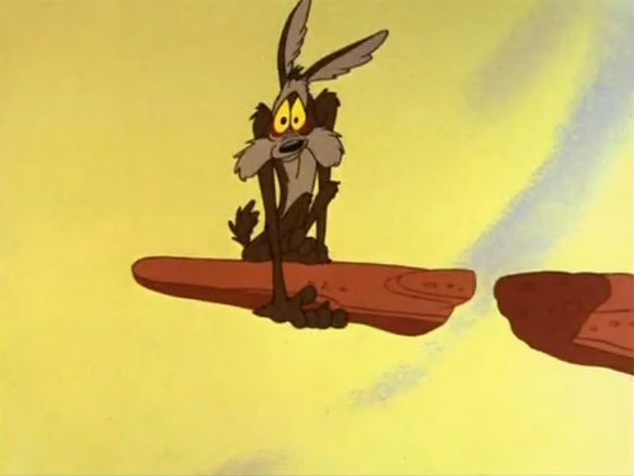
Maybe this flight won't go into a tailspin; perhaps it simply runs out of fuel.
With stock markets diving around the globe, a pressing question arises: is it time to get into Crash Positions?
In case you forgot how to get into Crash Positions, here's a reminder:
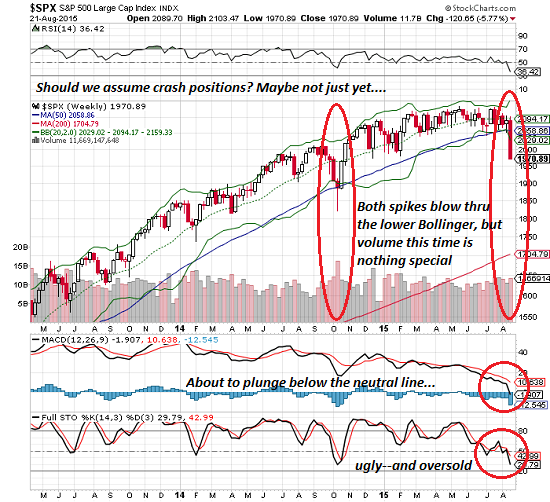
After a dizzying 500+ point drop in the Dow on Friday, should we brace for impact? There are plenty of fundamental and technical reasons to view the swoon this week as the initial downturn that presages a crash landing.
But if we look at the last equivalent spike down in October 2014, we're not so sure. Both spikes (October 2014 and August 2015) smashed through the lower Bollinger band, but the volume in last week's plummet was nothing special compared to the 2014 swoon.
Big moves have a bit more credence if they're accompanied by massive volume.


The prime minister insisted in an address on public television that he was proud of his time in office and had got “a good deal for the country”, despite bringing it “close to the edge”. He added that he was “shortly going to submit my resignation, and the resignation of my government, to the president”. The prime minister will be replaced for the duration of the short campaign by the president of Greece’s supreme court, Vassiliki Thanou-Christophilou – a vocal bailout opponent – as head of a caretaker government.


Nick Butler, former head of strategy for BP, told me, “We are in for a longer and more sustained period of low oil prices than in the late 1980s.” Why? He points to a perfect storm. Supply is up substantially because a decade of high oil prices encouraged producers throughout the world to invest vast amounts of money in finding new sources. Those investments are made and will keep supply flowing for years. Leonardo Maugeri, former head of strategy for the Italian energy giant Eni, says, “There is no way to stop this phenomenon.” He predicts that prices could actually drop to $35 per barrel next year, down from more than $105 last summer.
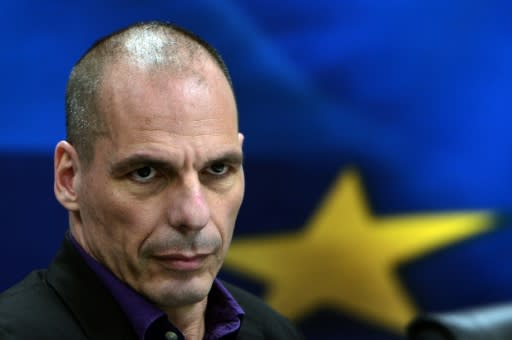


"Ask anyone who knows anything about Greece's finances and they will tell you this deal is not going to work.""The Greek finance minister... says more or less the same thin,


Study: Germany made €100bn profit on Greek crisisGreece’s biggest creditor Germany has made a huge profit on the country’s debt crisis over the last 5 years as it saved through lower interest payments on funds borrowed amid investor “flights to safety.”


The U.S. military has run the numbers on a sustained fight with Moscow, and they do not look good for the American side.


The global equity selloff that sent benchmark indexes to their worst week in four years played havoc with individual stocks and industries in the U.S. market.
To energy shares already snared in a bear market, add semiconductor stocks, which crossed the threshold by capping a decline of more than 20 percent. Apple Inc. also entered a bear market, while the Dow Jones Industrial Average entered a so-called correction with a decline of 10 percent from its last record. Biotechnology, small caps, media, transportation and commodity companies have also entered corrections.


The Standard & Poor’s 500 Index sank 3.2 percent on Friday to cap a weekly loss of 5.8 percent, the worst daily and weekly declines in almost four years. The benchmark gauge is down 7.5 percent from its last record in May, after dropping out of a trading range that has supported it for most of the year.


Learning Success: 

APPLY Tips From The Best


Image result for sir richard bransonSir Richard BransonVirgin Group – 

Anyone who owns more than 400 companies and is worth billions of dollars is clearly doing many things right. I admire Richard Branson’s tenacity, and I admire his personal brand


Friday, 7 August 2015

Emerging Markets In Free Fall, Oil Plunges, & More Top Insights


A selloff in emerging-market assets accelerated as currencies deepened their slump against the dollar amid mounting speculation that a U.S. interest-rate increase is imminent and energy stocks tumbled with oil prices.
Russia’s ruble fell for a second day as crude, the country’s biggest export, sank on concern a global supply glut will be prolonged. Brazilian bond yields rose to a record as President Dilma Rousseff suffered a setback in Congress that eroded measures to pare budgets and avoid a junk credit rating. The MSCI Emerging Markets Index traded at a more than two-year low as energy companies tumbled.

Developing-nation stocks, bonds and currencies have been dragged down by growing evidence that the U.S. economy is improving enough to embolden the Federal Reserve to raise borrowing costs for the first time since 2006 as soon as next month. The Fed’s near-zero interest rates have supported demand for riskier assets in emerging nations. Data on Thursday that showed filings for U.S. unemployment benefits near four-decade lows further bolstered the case for an increase.


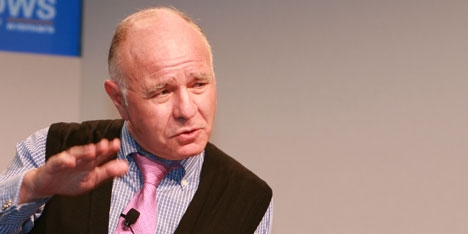
Marc Faber – The Fed Has No Intention To Raise Rates


With the U.S. economic recovery being doubted by weaker economic data, and more and more market watchers expecting the Federal Reserve to make a move on rates at a later date, Kitco News speaks with Marc Faber, editor of the Gloom Boom & Doom Report, to find out what he has to say about it. “Given the dollar strength and that most recent economic statistics in the U.S. have been on the weak side, I don’t think the Fed has any intention whatsoever to increase rates,” he says, adding that if they do they will make sure that the increase would stay below the cost of living. “In other words, we would still have negative real interest rates,” he explains. Looking to gold, Faber says considering gold’s current price compared to the highs of 2011, he thinks this is a “reasonably good entry point.” Finally, Faber comments on Europe, which he says might outperform the U.S. economy this year. “Most of the European markets – I’m not saying all, I’d say Germany, France, Italy – they’re up something like 10% in dollar terms. I think 2015 will see a year where Europe outperforms the U.S. massively.” 


Here's the Next Crisis "Nobody Saw Coming"


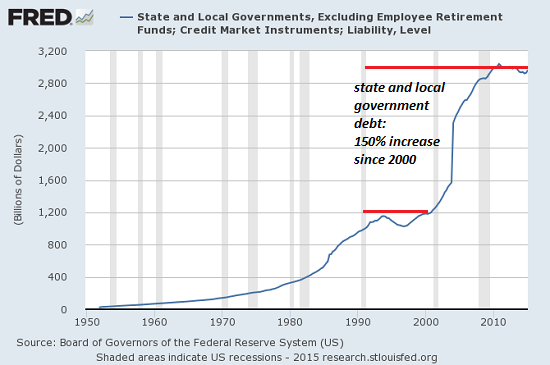
When borrowing become prohibitive (or impossible) and raising taxes no longer generates more revenues, state and local governments will have to cut expenditures.


"Strangely enough, every easily foreseeable financial crisis is presented in the mainstream media as one that "nobody saw coming."

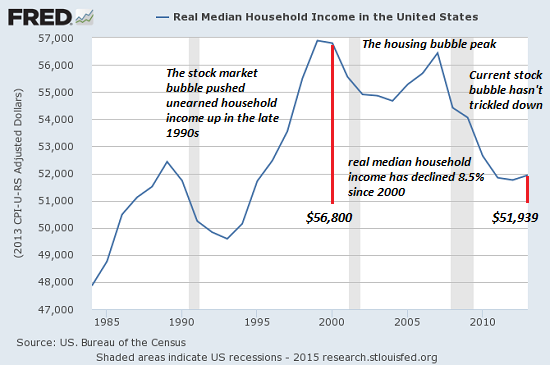
 No doubt the crisis visible in these three charts will also fall into the "nobody saw it coming" category.
Take a look at this chart of state and local government debt. As we noted yesterday, nominal GDP rose about 77% since 2000. So state and local debt rose at double the rate of GDP. That is the definition of an unsustainable trend


Earlier this year, as the market kept marching upward, I decided that buying put options on equities wouldn’t give me the kind of protection I was looking for. So I liquidated most of my equity holdings. We also shut down our equity strategy for the firm.
Of late, I’ve taken it a step further, starting to build an outright short position on the market. In the long-run, this may be losing proposition, but right now, I am rather concerned about traditional asset allocation.

Image result for abstract art jazz age


This money bubble is going to pop. It has to because there is just too much debt in the world. That debt has to be reconciled and, ultimately, when you are reconciling debt, it gets back to the point about collateral on the balance sheets. There is just not enough good collateral to support all of this paper money circulating out there


Image result for abstract art jazz age
The coverage of the TPP in the media was schizophrenic, on the one hand describing it as part of Obama’s “pivot to Asia” (as in an effort to contain China’s growing hegemony), meaning it was clearly a political enterprise, an “everybody but China” deal, and on the other hand, saying that the reason Americans should support it was those miniscule trade benefits. And of course, there was nary a mention of the cost in terms of national sovereignity.


“More people are finding jobs, but nobody feels optimistic about their income prospects,” he added. “That’s likely why it doesn’t feel like the economy has really recovered even though the statistics say it has.”


On a related matter—whether or not the nuclear agreement represents a bad deal for the people of Syria, who suffer under the Iran-supported Assad regime, which will presumably benefit financially from the lifting of sanctions on its primary sponsor—Kerry was somewhat dismissive. In response to my question, “Does it bother you that money will be going to Assad and Hezbollah?,” 

Kerry responded, “Yes, but it’s not dispositive. It’s not money that’s going to make a difference ultimately in what is happening.”


Canada Is On The Brink


 Of A‘Very Unusual


 Recession’


Canada is teetering on the edge of a recession.
The country's GDP has fallen for five straight months, the latest numbers coming in at a 0.2 percent contraction in May. And economists say Canada is about to hit its second-straight quarter of declining GDP, the technical definition of a recession.
Contributing to Canada's problems include plunging commodities prices, slowing exports and a falling Canadian dollar. The tumble in crude oil, which has fallen more than 15 percent year to date, has hit Canada hard as a commodities-heavy economy.
According to TD Bank's deputy chief economist, Derek Burleton, investor concerns about the Canadian economy date back to last year, when oil prices first began to fall.
"They're worried about Canada; they're still short Canada," Burleton said. "There's not a lot of upside to growth."


Learning Success: 

APPLY Tips From The Best


Warren Buffett, Berkshire Hathaway – He is a deeply conservative trader during the times that everyone around him is moving from one extreme to the other to the tune of huge losses and gains. Warren Buffett is a perfect example of patience, proving that slow and steady generally wins the business race. (Although I continue to press my own desire to spur Fishbowl’s inventory software business to race!)


Top Weekly Ideas and Insights

An Inconvenient Truth:


What Happens When Top Economists Realize Physical Growth Constraints?


 EXISTENTIAL REALITY 


"Humanity's Coming of Age"

 - The Last Days of Economic Growth -


Thursday, 16 July 2015

US Investors Ignore Global Nosedive So Far??? A Tale of Two Deals, & Top Insights


US stock prices steady as Fed suggests likely rate increase by end of year

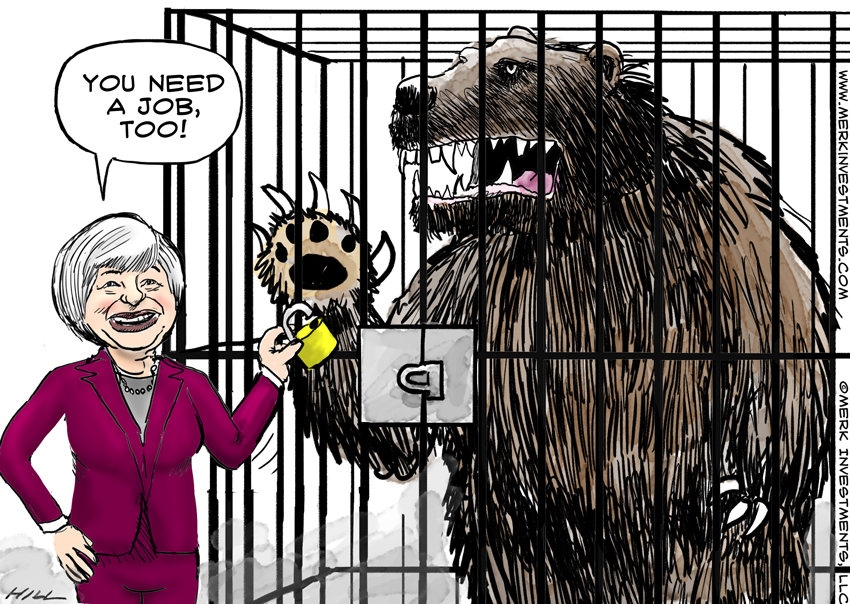
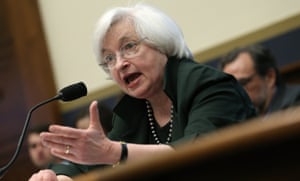
US stock prices held steady on Wednesday as the Federal Reserve chair, Janet Yellen, again suggested there would be an interest rate increase by the end of the year, while the euro fell ahead of a Greek government vote on whether to accept tough terms for a vital third bailout.
Janet YellenOil prices fell on worries of growing supply from Iran following a landmark deal that would lift sanctions that have curbed its oil sales for several years. 
“If the economy evolves as we expect, economic conditions likely would make it appropriate at some point this year to raise the federal funds rate,” Yellen said in a testimony prepared for a US House panel.
According to Yellen, the Federal Reserve is keeping an eye on the situation in Greece as well as the stock market turmoil in China. On Tuesday, China surpassed expectations when its gross domestic product rose by 7%.


China growth beats 


forecasts but stocks


dive again


China's economy grew an annual 7 percent in the second quarter, beating analys' forecasts, though its volatile stock markets took a sharp dive in a reminder of the threats to Beijing's efforts to direct the economy out of a slowdown.

Policymakers had already unleashed a series of measures to pull stocks out of a 30 percent nosedive and appeared to have succeeded last week, but Wednesday's tumble could reawaken concerns over the government's ability to manage the economy.

The day began on a positive note with the growth figures and monthly activity data that also beat expectations across the board, with factory output hitting a five-month high, following reports of increased bank lending on Tuesday.

As the National Bureau of Statistics released the upbeat figures, it described the stock markets as key to economic stability. As if on cue, the key indexes, already down in morning trade, fell more than 4 percent in the afternoon.

The CSI300 index eventually ended down 3.5 percent, while the Shanghai Composite Index lost 3 percent.

"Investors liquidated their positions as the GDP data failed to impress," said Steven Leung, a director at UOB Kay Hian in Hong Kong.


Greek MPs pass austerity bill as Athens police clash with protesters

Riot police use teargas outside the Greek parliament

Alexis Tsipras drives through tax increases and pensions shakeup amid angry splits in his Syriza party

Five years into the worst crisis to hit their country in decades, Greek MPs voted by a large majority in the early hours of Thursday morning to accept draconian austerity as the price of further bailout funds but at great personal cost to prime minister Alexis Tsipras
In a vote that saw tensions soar in and outside parliament, the embattled leader’s radical leftist Syriza party suffered huge losses as 40 MPs revolted against the measures. A total of 229 lawmakers voted in favour of the internationally mandated measures, 64 against and six abstained.


Iranians take to Tehran streets to hail nuclear deal


Iranians poured onto the streets of capital Tehran after the Ramadan fast ended at sundown on Tuesday.


Iranians poured onto the streets of the capital Tehran, after the Ramadan fast ended at sundown on Tuesday to celebrate the historic nuclear deal agreed with world powers in Vienna.
Supporters of President Hassan Rouhani and his top negotiator, Foreign Minister Javad Zarif, waved Iranian flags from their cars, while drivers honked their car horns.
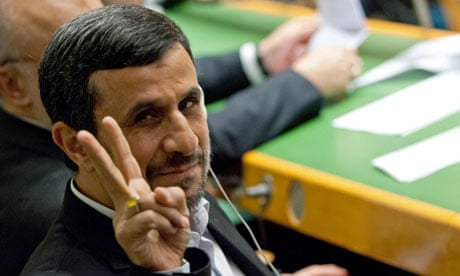
At least three thousand people also gathered along Valiasr Street near the Tajrish district of northern Tehran, singing celebratory songs while dancing and flashing victory signs.  
With the signing of the agreement, people who attended the celebration said they are hopeful that the country's economy and the lives of ordinary citizens would improve. 
Once sanctions are lifted in the coming months, Tehran will gain access to $100-bn in frozen assets, while opening the country for trade.
On Wednesday, Rouhani hailed the agreement as a political victory for his country, saying the agreement meant that Iran would no longer be regarded as an international threat.


The pool of distressed U.S. corporate bonds, typically those yielding more than 10 percentage points above benchmarks, has swelled to $127 billion, from the low last year of $43.7 billion, Bank of America Merrill Lynch index data show. This month alone, Peabody Energy’s $4.8 billion of bonds have fallen 14.9 percent, while Cliffs Natural Resources’s $2.5 billion of notes have declined 14.6 percent.


Spanish Economy Minister Luis de Guindos, left, speaks with Italian Finance Minister Pier Carlo Padoan during a meeting of EU finance ministers at the EU Council building in Brussels on Tuesday, July 14, 2015. British Treasury chief George Osborne arrived to a EU meeting of finance minister with a clear message, don't expect Britain, which is not part of the euro, to pay for any of Greece's rescue money.Italy's public debt has risen to a new record of 2.2 trillion euros ($2.4 trillion), up by 23.4 billion euros in May. The figure published by the central bank on Tuesday brought recriminations by opposition politicians against Finance Minister Pier Carlo Padoan for not bringing down the debt load, which had even at lower levels threatened a sovereign debt crisis.


That is the prediction from Ruchir Sharma, head of emerging markets at Morgan Stanley Investment Management, who says a continuation of China’s slowdown in the next years may drag global economic growth below 2 percent, a threshold he views as equivalent to a world recession.


Popular Posts All Time

Learn, win achieve