LEADERS

International LEADERS Calling Market Crashes Years Ahead
Second to None, Anywhere...

'Warned 2000 tech slide; predicted 2008 meltdown in 2007. Forecasted 2020 global economic collapse in 2011, AND NOW- BY 2050 - THE MOTHER OF ALL CRASHES"

THE #FUTURE #OUTLOOKS - KEY AREAS OF #CONCERN AND #RISK

  Economic and Markets 2023 Outlook WARNING  What Worked for the Past Decades Will Not For The Next WHAT'S COMING - GLOBAL RECESSION? DE...

GLOBAL MARKETS


Live World Indices are powered by Investing.com

Champion, Lead, Inspire

Search This Blog

GREAT BARGAINS; FUN IDEAS

Showing posts with label Saudi Arabia. Show all posts

Wednesday, 19 August 2015

Greenspan Warns Exuberant " Bond Bubble To Bust" & More Top Insights


Greenspan warns about bond-market bubble


: Former Federal Reserve Chairman Alan Greenspan is sounding the alarm about a bubble that he believes is forming in the bond market.
In two television interviews in recent days, Greenspan said interest rates could shoot higher and derail the economy when the bubble bursts.
The former Fed chairman says the current situation in the bond market is comparable to what happens in the stock market during an equity bubble.
Noting that stock-market bubbles are typically characterized by extreme price-to-earnings ratios, Greenspan said extremely low yields are telling a similar tale for bonds.
“If you turn the bond market around and you look at the price of bonds relative to the interest received by those bonds, that looks very much like the usual spread which would concern us if it were equities, and we should be concerned,” Greenspan said in an interview with Fox Business Network.
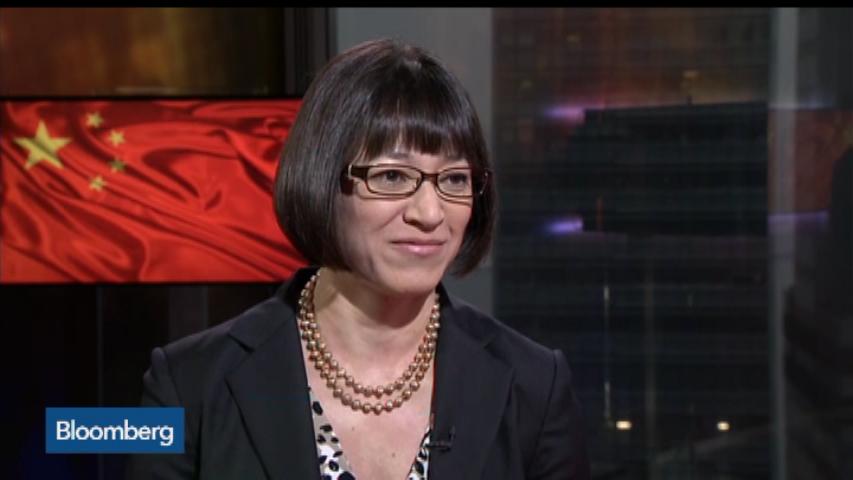


There are China analysts, and then there is Charlene Chu.
She has been called a rock star of Chinese-debt analysis. Money managers the world over pay tens of thousands of dollars for access to her research at her new firm Autonomous Research. Her reports are rarely leaked, and she rarely gives interviews.

Business Insider got a glimpse at a massive report she wrote at the end of July.

This was when everyone was freaking out about the precipitous fall of China's stock markets, and it predates the Chinese authorities' decision to devalue the yuan.

Her base case in the report was for Chinese authorities to maintain stability of the equity market and forestall contagion.There is also a doomsday scenario, however, in which there is contagion to other domestic and international markets, large capital outflows, and an acceleration of problems associated with financial-sector weakness and corporate indebtedness.

The report said: "This in turn would likely lead to a significant pullback in credit, putting the brakes on GDP growth and bringing an end to China's decades of stellar economic growth. At that point, social and political stability — the critical wild cards in this equation — could come under question."

This is what doom looks like


Growth in OPEC’s biggest exporter will slow to 2.8 percent this year and 2.4 percent in 2016 after oil prices slumped, the Washington-based IMF said in a statement on Monday. If spending isn’t curbed, its fiscal deficit would be “very large” this year and over the medium term, it added.


“Moody’s isn’t the only one predicting that growth will be slow to rebound,” said Ari Santos, a trader at Sao Paulo-based brokerage H.Commcor. “Looking forward, we’ll have a stagnant economy, with no growth and no outlook to grow.”
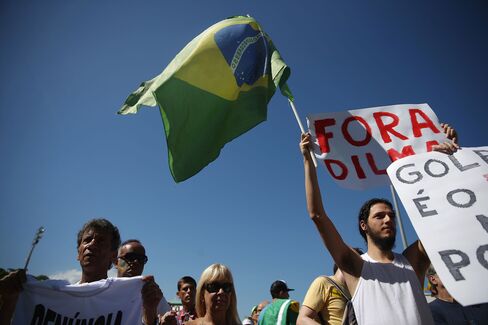


Protesters calling for the impeachment of President Dilma Rousseff march along Copacabana beach on Aug. 16, 2015.
In the midst of its deepest economic and political crisis in a generation, Brazil is contending with a business climate so punishing that major projects across numerous sectors are being frozen or shrunk, while small businesses slash prices and shift focus.


Singapore-based wealth managers, already under pressure from a global move towards tax information sharing, face a more immediate threat as Asian countries including Indonesia and India look to chase undeclared money in the low-tax city state. A global crackdown on tax evasion launched during the 2008 financial crisis has already forced Switzerland and other European offshore hubs to surrender their prized bank secrecy.


The combined deficit of private sector DB schemes in the UK

 now stands at around £900 billion, up from £250 billion

 since the start of the millennium, despite companies pouring

 in £500 billion towards pension saving over that time.

 According to Hymans Robertson, the stark figures highlight

 that for too long pension schemes have been taking too 

much risks


Learning Success: 


APPLY Tips From The Best
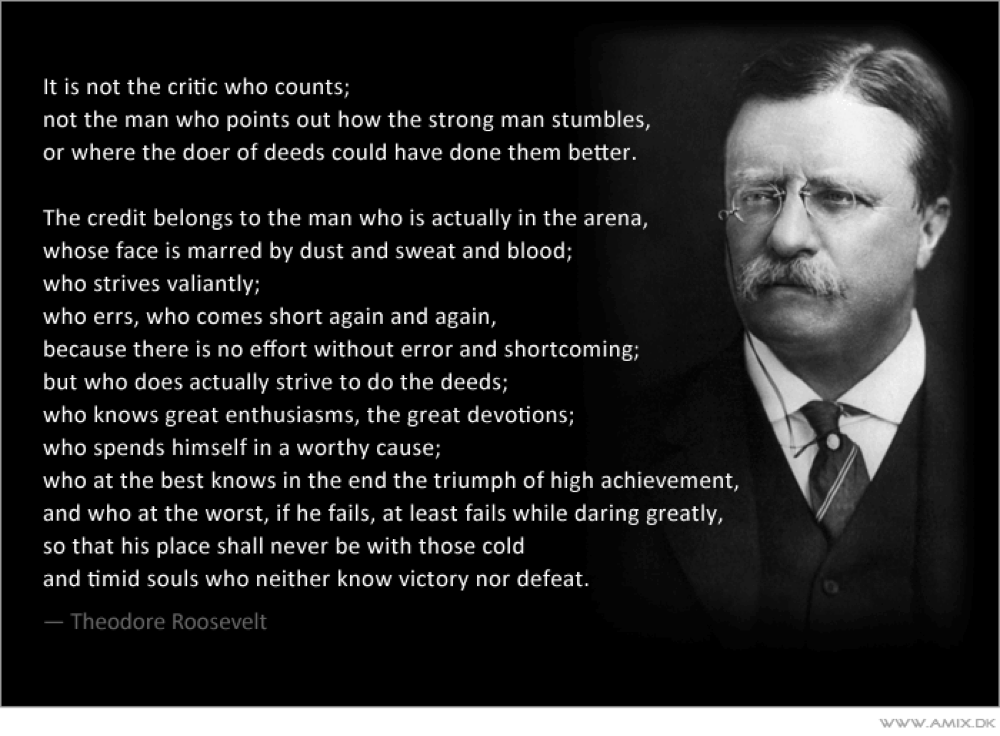

Larry Page,  Google – 


Image result for larry pageLarry Page is another example of a businessperson who can persevere any challenge. Larry and his company have faced much criticism and received ample praise over the years for his company’s actions. But in the midst of the storm, he has never let what others think sway him from pursuing the course for his company that he considers the best.



Top Weekly Ideas and Insights


An Inconvenient Truth


"Battle For Oil" 


What Happens When Political Interests Get Desperate?


EXISTENTIAL REALITY 


"Coming To The End Of Oil Age"


 - Looking Beyond The Brink -


Monday, 10 August 2015

Dow Losing Streak Ain't Over 'Til Its Over, & More Top Insights


Dow 7-day losing streak worst since debt-ceiling crisis


U.S. stocks closed lower Friday, with the Dow industrials hitting its worst losing streak since 2011’s debt-ceiling crisis, after the jobs report matched economists’ estimates, boosting the chances for a Federal Reserve interest-rate hike in September.
The nonfarm-payrolls report showed that the U.S. gained 215,000 jobs in July, largely matching expectations, and the unemployment rate stayed pat at 5.3%.

The solid employment data offers little reason to upend Federal Reserve Chairwoman Janet Yellen’s plan to lift rates, possibly at the next two-day meeting of the Federal Open Market Committee, which begins on Sept. 16.
“The jobs report doesn’t increase the likelihood that the [Federal Reserve] will raise rates in September, but it also doesn’t decrease the likelihood,” Randy Frederick, managing director of Schwab Center for Financial Research, told MarketWatch.
The Dow Jones Industrial Average DJIA, -0.27%  declined 46.37 points, or 0.3%, to 17,373.38, after having been down as many as 141 points earlier in the session. With seven straight days of losses, it marks the longest losing streak for the index since the height of the debt-ceiling drama in the summer of 2011.

Banks, miners drive Australian share market collapse


The Australian sharemarket dived again today as banking stocks tumbled in the wake of ANZ’s capital raising while trading was also soured by resource shares after a major writedown from explosives and blasting systems firm Orica.
At the 4.15pm (AEST) official market close, the benchmark S&P/ASX200 was 135.3 points, or 2.41 per cent, lower at 5474.8, while the broader All Ordinaries index had fallen 127.8 points, or 2.28 per cent, to 5472.3.
The result put the ASX200 at about 3.7 below last Friday’s close of 5699.2, more than offsetting last week’s gains of 2.4 per cent.
The market fell initially on weaker banking stocks as ANZ slumped sharply. The lender emerged from a trading halt this morning after announcing a $3 billion capital raising yesterday.


When China's tinderbox economy implodes, who will be left to bid up the world's surplus commodities and real estate?
After 30 years of torrid expansion, perhaps the single most consequential factor in China’s economy is how much of it is a “black box”: a system with visible inputs and outputs whose internal workings are opaque.
There are number of reasons for this lack of transparency:
1. Official statistics reflect what officials want to project, not the unfiltered data.
2. Policy decisions are made behind closed doors by a handful of leaders.
3. There is little institutional history of transparency.
4. Many important statistics are self-reported and prone to distortion.
5. Large sectors of the economy are informal and difficult if not impossible to measure accurately.
6. Endemic corruption distorts critical economic yardsticks.
7. There is little historical precedent to guide policy makers and individual investors.


King Salman bin Abdulaziz Al Saud

Saudi Arabia will start running into trouble within two years or face draconian austerity. Social spending is the glue that binds a medieval Wahhabi regime midst unrest among the Shia minority, attacks from ISIS, and the invasion of Yemen. Diplomatic spending is what underpins the Saudi sphere of influence in a Middle East version of Europe's Thirty Year War


Germany persuaded European leaders to rally more firmly around what might be called the Berlin consensus by a combination of patient diplomacy and clever brinkmanship and by exploiting alarm over the antics of Greece’s leaders


China's July exports slump 8%, raises pressure for more stimulus


Chinese exports tumbled 8.3 percent in July, their biggest drop in four months and far worse than expected, reinforcing expectations that Beijing will be forced to roll out more stimulus to support the world's second-largest economy.
Imports also fell heavily from a year earlier, in line with market forecasts but suggesting domestic demand might be too feeble to offset the weaker global demand for China's exports.


Members of the Brazil's Movement Against Corruption bang on pots and pans in protest against President Dilma Rousseff, during her televised speech.
Brasilia: Allies of Brazilian President Dilma Rousseff have turned to her opponents to talk about filling what they see as a damaging leadership vacuum after losing confidence in her ability to pull the country out of an economic tailspin, party insiders said on Thursday.

Brazil's worst economic downturn in 25 years has undercut confidence in Ms Rousseff's leadership and raised the spectre of her impeachment just six months into her second term.


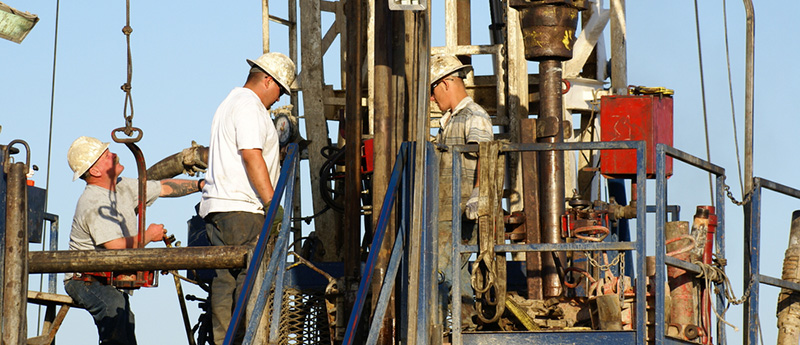
Shale Gas Reality Check


In October 2014, Post Carbon Institute published the results of what likely remains the most thorough independent analysis of U.S. shale gas and tight oil production ever conducted. The process of drilling for shale gas and tight oil is known colloquially as “fracking” and has drawn a great deal of controversy—considered by some as an energy revolution and others as an environmental and human health catastrophe.


shale-gas-reality-check-blog-top


Top Weekly Ideas and Insights

An Inconvenient Truth


"Eurasia BIG Bang" 

What Happens When Geo-Political Shifts Occur?


EXISTENTIAL REALITY 

"Humanity's Coming of Age"

 - Last Days: Hegemony or Survival -


Popular Posts All Time

Learn, win achieve