LEADERS

International LEADERS Calling Market Crashes Years Ahead
Second to None, Anywhere...

'Warned 2000 tech slide; predicted 2008 meltdown in 2007. Forecasted 2020 global economic collapse in 2011, AND NOW- BY 2050 - THE MOTHER OF ALL CRASHES"

THE #FUTURE #OUTLOOKS - KEY AREAS OF #CONCERN AND #RISK

  Economic and Markets 2023 Outlook WARNING  What Worked for the Past Decades Will Not For The Next WHAT'S COMING - GLOBAL RECESSION? DE...

GLOBAL MARKETS


Live World Indices are powered by Investing.com

Champion, Lead, Inspire

Search This Blog

GREAT BARGAINS; FUN IDEAS

Showing posts with label global crash. Show all posts

Friday, 28 August 2015

China Piles Up Staggering $5 Trillion In Losses & More #Insights

Take the combined size of all stocks traded in Brazil, Russia, India and South Africa, multiply by two, and you'll get a sense of how much China's market value has slumped since the meltdown started. Shanghai-listed equities erased $5 trillion since reaching a seven-year high in June, half their value, as margin traders closed out bullish bets and concern deepened that valuations were unjustified by the weak economic outlook. 

The four other countries in the BRICS universe have a combined market capitalisation of $2.8 trillion, according to data compiled by Bloomberg. 


In the year to July, China's customs agency reports that imports from Australia are down by $15bn dollars on the same period last year - a loss which is already equal to 1% of Australia's GDP, and many other countries stand to lose out to similar degrees. China's imports overall are down by 14.6% over 2015. Find out what happens if this decline continues for the rest of the year - or worsens - and how that loss compares to each country's GDP


Eventually, even at near zero interest rates, the amount of debt becomes too high, relative to income. Governments become afraid of adding more debt. Young people find student loans so burdensome that they put off buying homes and cars. The economic “pump” that used to result from rising wages and rising debt slows, slowing the growth of the world economy. With slow economic growth comes low demand for commodities that are used to make homes, cars, factories, and other goods. This slow economic growth is what brings the persistent trend toward low commodity prices experienced in recent years.

A strange thing happened fifteen minutes after stock markets opened for regular trading on Friday, August 21, 2015. At least some people on the nationally prominent MarketWatch website were privileged to see in advance what would prove to be the full-day losses for both the Dow Jones Industrial Average (INDU) and the Standard & Poors 500 (SPX) indices. This harbinger or revelation of what was to come occurred six hours and fifteen minutes before the market's close. The uncanny trend projections, or perhaps target prices, were made available while the Dow was down about 180 points -- more than 350 points above its astonishing Friday close.

There is an almost touching faith that markets are rigged when they loft higher, but unrigged when they crash. Who's to say this crash isn't rigged? A few things about this "crash" (11% decline from all time highs now qualifies as a "crash") don't pass the sniff test.


"Unless we recognise that, and recognise that the productivity challenge and the fiscal challenge are intimately linked, and we have to deal with both of them, then we will go on continuing to repeat the mistakes that we've been making and that will get us into a situation that none of us want to be in."
Dr Parkinson earlier told a room of more than 90 corporate, community and academic leaders that productivity reform could not be detached from fiscal reform.


The ‘Black Monday' stock market turmoil on 24 August saw the FTSE 100 index plummet 14% below its peak of almost 7,000 points in February.

Investors across the globe began panic selling stocks, particularly in commodities, amid fears of the much anticipated growth slowdown in China.
While about £96bn was wiped off share values in the UK blue chip index, the Dow fell 1,000 points on opening and the Shanghai Composite experienced total losses of 35% since June.


Hymans Robertson put the total pain for UK defined benefit (DB) schemes at a staggering £30bn surge in aggregate deficits in a day, as equities values and bond yields headed south. 


Commentators are divided on whether the event was merely a market correction or an indication of more chaos to come.

But what many agree on is the fact that China is no longer the world's economic growth engine, posing the question of where future investment returns will come from.


Learning Success: 


APPLY Tips From The Best


Image result for sir richard bransonSir Richard BransonVirgin Group – Anyone who owns more than 400 companies and is worth billions of dollars is clearly doing many things right. I admire Richard Branson’s tenacity, and I admire his personal brand


Tuesday, 18 August 2015

Ten Currencies Hit Wall St. Bank Watch List, & More Top Insights


Morgan Stanley's Fragile Five


Swells To Troubled 10 

 In Selloff

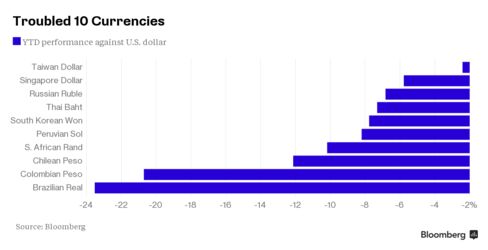
Forget the “Fragile Five.” These days, strategists at Morgan Stanley are worried about what could be called the “Troubled Ten.”
Image result for morgan stanleyThat’s how many nations they say are particularly at risk since China devalued the yuan. While the analysts haven’t used the term themselves, it’s as good a description as any for the currencies -- from the Brazilian real to Peru’s sol and South Korea’s won -- which have trading ties making them susceptible to a slowdown in the world’s second-biggest economy.
“It’s all about vulnerability,” said Hans Redeker, the London-based global head of foreign-exchange strategy at Morgan Stanley. “Major victims of the policy change this time are currencies of countries with high export exposure and export competitiveness with China.”

http://www.bloomberg.com/news/articles/2015-08-16/morgan-stanley-s-fragile-five-swells-to-troubled-10-in-selloff


23 Nations Around The World Where Stock Market Crashes Are Already Happening


You can stop waiting for a global financial crisis to happen.  The truth is that one is happening right now.  All over the world, stock markets are already crashing.  Most of these stock market crashes are occurring in nations that are known as “emerging markets”.  In recent years, developing countries in Asia, South America and Africa loaded up on lots of cheap loans that were denominated in U.S. dollars.  But now that the U.S. dollar has been surging, those borrowers are finding that it takes much more of their own local currencies to service those loans.  At the same time, prices are crashing for many of the commodities that those countries export.  The exact same kind of double whammy caused the Latin American debt crisis of the 1980s and the Asian financial crisis of the 1990s.
As you read this article, almost every single stock market in the world is down significantly from a record high that was set either earlier this year or late in 2014.  But even though stocks have been sliding in the western world, they haven’t completely collapsed just yet.


Bush explicitly exempted fracking operations from key provisions of the Safe Drinking Water Act. These exemptions from a fundamental environmental protection law provided the oil and gas industry the immunity to develop a highly polluting process on a grand national scale.


Solar pricing is now cheaper than new imported thermal coal-fired power plants.  Thus it is irrational to build another power plant fuelled by imported coal. The death knell for the seaborne traded coal industry has sounded.


Image result for orwell 1984

When discussing what makes a difference in the health of
 Canadians, we tend to think first of the health care system. 
Doctors and hospitals, physiotherapists and pharmacies;
 these things are important. But they are far less important 
than other elements of people’s lives. 

Low interest rates act as a boost to the economy; they spur 

lending and encourage spending capital. Higher interest

 rates do the opposite; they suppress lending, and encourage 

saving — both of which slow an economy.
In other words, if rates were to lift off in a fragile economy,

 one like we have, it could cause a greater collapse than the

 financial crisis because the few people who are spending

 now would stop and sock their wealth away in savings to 

enjoy the higher rates.

Looking Back

Why Southeast Asia's Boom Is A Bubble-Driven Illusion


Location of Southeast Asia. This map primarily...Since the Global Financial Crisis, Southeast Asia has been one of the world’s few bright spots for economic growth and investment returns. With its relatively young population of 600 million and its growing middle class, Southeast Asia has been the scene of a modern-day gold rush as international companies clamor to get a piece of the action. Unfortunately, my research has found that much of this region’s growth in recent years has been driven by ballooning credit and asset bubbles – a pattern that is also occurring in numerous emerging economies across the globe.

In the past few months, I have published reports about the growing bubbles inSingaporeMalaysiaThailandthe Philippines, and Indonesia, and I will use this report to explain the region’s economic bubble as a whole. My five Southeast Asian country reports have generated quite a bit of interest and controversy, and were read nearly 1.3 million times, and were publicly denied by the central banks of SingaporeMalaysia, and the Philippines.

Image result for illusions


Top Weekly Ideas and Insights


An Inconvenient Truth


"Battle For Oil" 

What Happens When Political Interests Get Desperate?


EXISTENTIAL REALITY 

"Coming To The End Of Oil Age"


 - Looking Beyond The Brink -


Tuesday, 4 August 2015

US Markets Lower As Global Carnage Advances, & More Top Insights


Image result for market crash abstract art


Stocks finish lower, weighed down by oil slump


U.S. stocks finished lower Monday following weak economic data and a further slump in crude-oil prices, but managed to pare early losses.
Stocks had been in clear retreat after the Institute for Supply Management’s closely watched manufacturing survey for July, along with a similar report from Markit, came in weaker than expected.
Also, June construction spending grew 0.1%, well below expectations. Ahead of the opening bell, data from the Commerce Department showed personal spending rose slightly less than expected in June, while income was slightly above forecasts.
The Dow Jones Industrial Average DJIA, -0.52%  finished down 91.66 points, or 0.5%, at 17,598.20, after being down as much as 193 points during the session. The biggest losers on the index were Chevron Corp. CVX, -3.25% which closed down 3.3%, and Apple Inc. AAPL, -2.36% which shed 2.4%.
The S&P 500 index SPX, -0.28%  declined 5.8 points, or 0.3%, to finish at 2,098.04, after being down nearly 17 points earlier in the session. While utilities had been the sole gaining sector for most of the session, the consumer staples, telecom, financial and health care sectors managed to turn in slight gains. The energy sector led decliners with a 2% loss.


Stocks Plunge in Greece as Athens Exchange Reopens


ATHENS — Investors issued a vote of no confidence in Greece’s economy on Monday, dumping stocks as trading on the Athens exchange resumed for the first time in five weeks.
A plunge of more than 16 percent for the main Greek index and a 30 percent sell-off for bank stocks were the latest signs of Greece’s shattered economy. But the resumption of trading was a necessary step as Greece tries to emerge from controls on financial activity that the government, confronted with a bank run, imposed at the end of June.
Analysts said stock prices could begin to recover in the weeks to come, bringing much-needed capital into the country, as investors with an appetite for risk look for bargains.


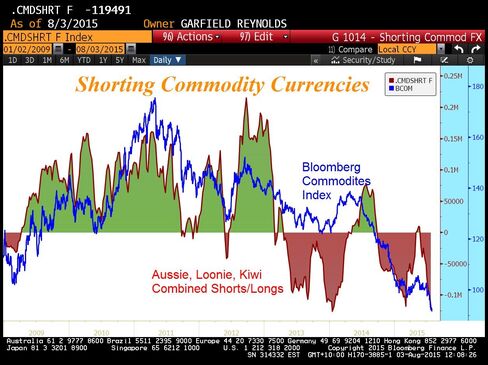
Commodity currencies are off to the worst start to a year since the financial crisis amid signs of a slowdown in China, the world’s biggest consumer of raw materials.


The Canadian, Australian and New Zealand dollars plunged against their U.S. counterpart as Bloomberg’s commodity index tumbled to a more than 13-year low. The currencies of commodity-exporting nations suffered after an official Chinese factory gauge slipped to the least in five months, dimming the demand outlook.
“In the Group-of-10 space, I continue to maintain short positions in all three: Australia, Canada and New Zealand,” Alessio de Longis, a money manager in the Global Multi-Asset Group at OppenheimerFunds Inc., said from New York. “Even if commodities were to stabilize, I think this weakness will feed into additional policy easing in these countries.” A short position is a bet that an asset will decline in value.


Former greek finance minister Yanis Varoufakis

A secret group designed a parallel payment system could have been used to switch the currency to the drachma.


There is no legal way to break free of the euro and the domination of the troika. The government has no access to the critical data files of its own banks, which are controlled by the ECB. Once a nation parts with the control of its currency and credit, it matters not who makes the nation’s laws.  Usury, once in control, will wreck any nation.


Image result for abstract art hatred

It is rarely mentioned in media that the US. is providing substantial support to the “Saudi-led” war, now in its fifth month


rivera1931.jpg (57625 bytes)
In its final version, the rule retains the same basic structure as the draft proposal: It assigns each state a target for reducing its carbon pollution from power plants, but allows states to create their own custom plans for doing so. States have to submit an initial version of their plans by 2016 and final versions by 2018.
But over all, the final rule is even stronger than earlier drafts and can be seen as an effort by Mr. Obama to stake out an uncompromising position on the issue during his final months in office.


Image result for abstract art hatred
A wildfire that has been raging in northern California since last Wednesday jumped 20,000 acres overnight, and has now charred 47,000 acres and is threatening 6,300 homes. Fire officials say the massive blaze, called the Rocky Fire, in the Lower Lake area north of San Francisco is only 5% contained. Already it has destroyed 24 homes and 26 outbuildings.


First, there are smart market participants, always. They also see the current sentiment. If the majority of market participants do not want to buy gold, then smart investors will do the opposite at the time selling is exhausted: go long in that market.


Learning Success: 

APPLY Tips From The Best


Warren Buffett, Berkshire Hathaway – He is a deeply conservative trader during the times that everyone around him is moving from one extreme to the other to the tune of huge losses and gains. Warren Buffett is a perfect example of patience, proving that slow and steady generally wins the business race. (Although I continue to press my own desire to spur Fishbowl’s inventory software business to race!)


Top Weekly Ideas and Insights

An Inconvenient Truth:


What Happens When Top Economists Realize Physical Growth Constraints?


 EXISTENTIAL REALITY 


"Humanity's Coming of Age"

 - The Last Days of Economic Growth -


Popular Posts All Time

Learn, win achieve